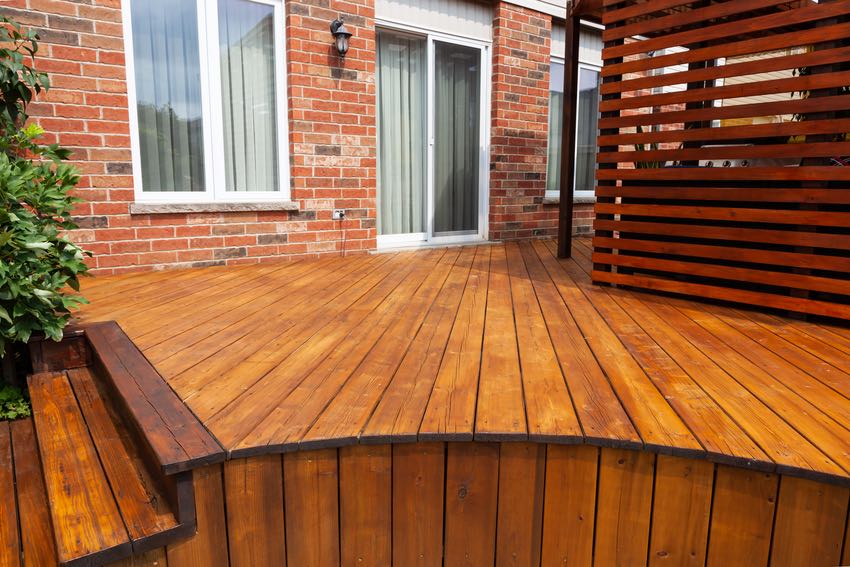
The Science of Lignin Protection: A Definitive Analysis of Deck Finishing Systems
Best exterior staining for decks the preservation of exterior wood decking is a continuous battle against the forces of photodegradation, moisture cycling, and biological colonization. Unlike vertical siding, a deck serves as a horizontal catchment system for UV radiation and standing water, creating a micro-environment that is uniquely hostile to organic materials. When we discuss the selection of a finish, we are essentially discussing the mitigation of cellular breakdown in the wood. Wood is a complex composite of cellulose, hemicellulose, and lignin; the latter acts as the “glue” that binds the fibers together. When UV light penetrates a finish, it breaks these lignin bonds, causing the surface to “gray” and lose its structural cohesion.
Historically, wood finishing was a matter of simple saturation—using oils and fats to displace water. Modern material science has shifted this toward a sophisticated interplay of resin chemistry, trans-oxide pigments, and mildewcide packages. However, the proliferation of options has led to a paradox of choice for the property owner. The efficacy of a deck stain is not a universal constant; it is a variable dependent on the wood species, the age of the timber, and the local climate’s “wet-dry” frequency. A finish that excels on a dense, oil-rich Ipe deck in Miami will fail catastrophically on a pressure-treated Southern Yellow Pine deck in the Pacific Northwest.
Achieving long-term organic visibility and structural health for a deck requires moving beyond the marketing nomenclature of “waterproofing.” This editorial analysis treats the deck as a high-performance building component that demands a specific maintenance metabolism. We will explore the chemical nuances of film-formers versus penetrants and the logistical realities of surface preparation—the often-ignored phase that dictates 90% of the coating’s eventual success or failure.
best exterior staining for decks
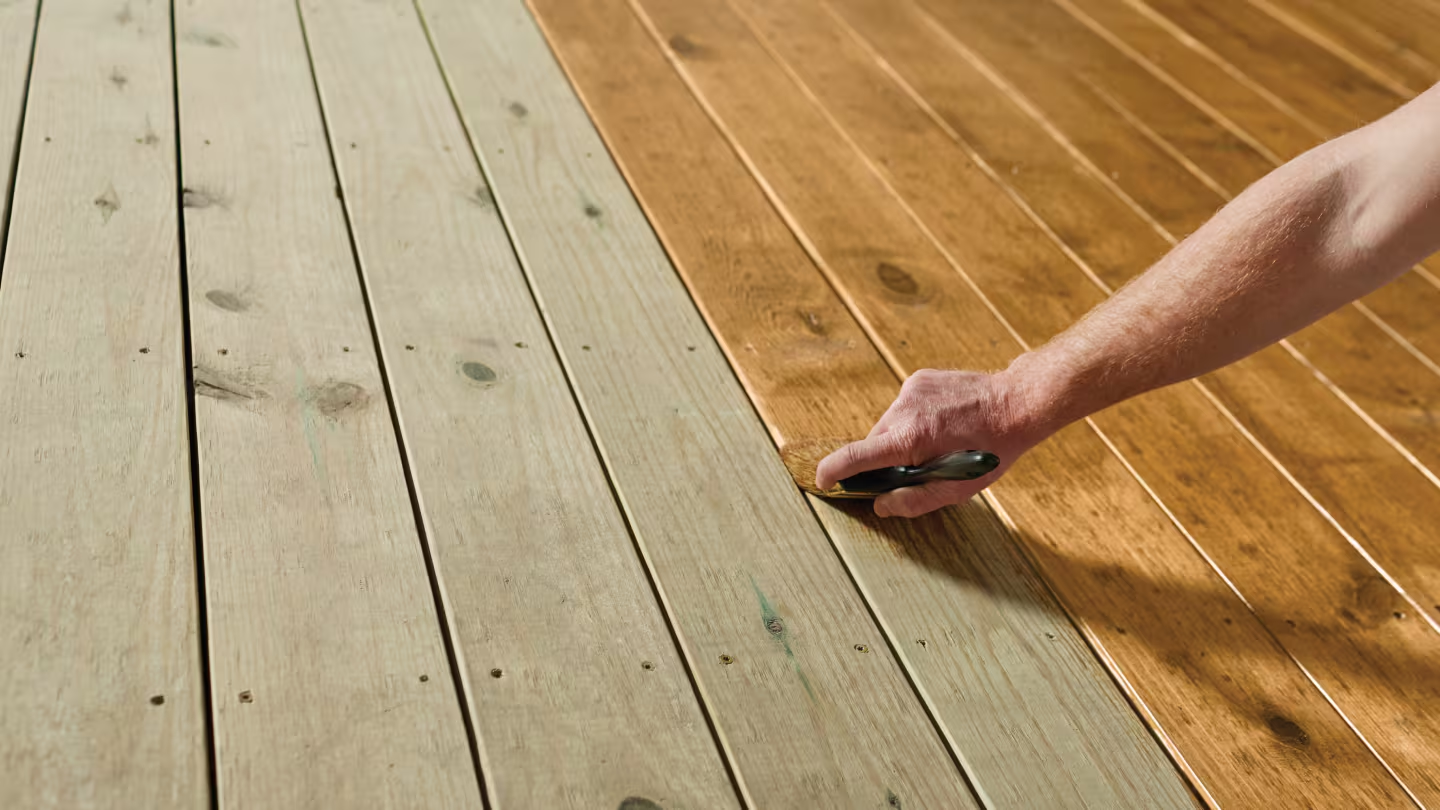
To accurately identify the best exterior staining for decks, one must first dismantle the oversimplification that “best” equals “longest-lasting.” In the realm of masonry or siding, longevity is a primary KPI; in decking, longevity can be a trap. A coating that stays on the wood for ten years is likely a high-build, film-forming product. While this offers excellent initial protection, it eventually fails through peeling and cracking. Once a film-former begins to fail, the restoration process requires invasive sanding or chemical stripping. Conversely, a penetrating oil may only last two years, but it fails gracefully by simply fading, allowing for a “clean and recoat” maintenance cycle that does not damage the wood fibers.
Multi-perspective evaluation involves looking at the “Solids Content” and “Pigment Load.” Transparent stains offer the most natural aesthetic but provide the least UV protection because they lack the metallic oxides (pigments) that block solar radiation. Solid-color stains provide the best protection but obscure the wood grain entirely, behaving more like a thin paint. The “best” choice is therefore a calculation of how much aesthetic character the owner is willing to sacrifice for a longer interval between maintenance cycles.
A significant misunderstanding in the industry is the role of VOC (Volatile Organic Compound) regulations. Since the early 2000s, environmental laws have forced a shift away from traditional high-solvent oil stains toward water-based or “high-solids” oil formulations. Many professionals argue that these newer, environmentally friendly formulas are more prone to “lap marks” and premature failure. Understanding the current best options requires recognizing that modern water-reducible alkyds are engineered to mimic the penetration of old-school oils while complying with modern air-quality standards.
Deep Contextual Background: From Pitch to Polymers
Best exterior staining for decks the history of wood preservation is a history of naval and agricultural necessity. For centuries, Scandinavian “Pine Tar” was the gold standard, used to seal ships and stave churches. It worked by deeply saturating the wood with resins that were naturally resistant to rot. In the mid-20th century, the advent of petroleum-based oils like linseed and tung oil allowed for faster drying times and clearer finishes, though these organic oils often served as a food source for mold and mildew unless heavily treated with toxins.
The 1970s and 80s introduced the “Latex Revolution,” where water-based resins promised easier cleanup and better color retention. However, these early water-based products frequently failed on decks because they formed a “plastic” skin that couldn’t handle the internal pressure of moisture vapor trying to escape the wood. Today, we are in the era of “Hybrid Chemistry”—coatings that use water as a carrier but contain emulsified oils that penetrate the wood cells once the water evaporates. This systemic evolution has allowed us to achieve the penetration of a traditional oil with the UV resistance and low-odor benefits of a water-based synthetic.
Conceptual Frameworks and Mental Models Best Exterior Staining For Decks
To navigate the complexities of staining, three mental models are particularly useful:
1. The Hydrostatic Pressure Relief Valve
Wood is a hygroscopic material; it is constantly taking on and releasing moisture. Think of a deck stain as a semi-permeable membrane. If the coating is too “tight” (non-breathable), the moisture trapped inside the wood will expand under the heat of the sun, turning into vapor and physically pushing the stain off the surface. The “best” stains act as a relief valve.
2. The Sacrificial Pigment Theory
UV protection in wood is not unlike sunscreen for human skin. The pigments in the stain are sacrificial; they absorb the solar energy so the lignin doesn’t have to. As the color fades, the “sunscreen” is being used up. This model helps owners understand that fading is not a product failure, but a sign that the system is working.
3. The Surface Energy Model
New wood (especially planed lumber) has “mill glaze,” a compressed layer of fibers that has very low surface energy, meaning it repels liquids. Without increasing the surface energy—usually through sanding or chemical “opening”—even the highest quality stain will simply sit on top and fail to bond.
Key Categories of Stain and Strategic Trade-offs
Selecting a finish requires balancing the “Transparency vs. Protection” scale.
Decision Logic: The Species Match
-
Pressure-Treated Pine: Use a high-quality semi-transparent oil. Pine is porous and accepts penetration well, but its tendency to warp requires a flexible finish.
-
Redwood/Cedar: Use a translucent or semi-transparent “Natural” tone. These woods have inherent tannins that resist rot, so the stain’s primary job is UV blocking.
-
Ipe/Mahogany: Use specialized “Exotic” oils with ultra-fine pigments. Dense hardwoods will reject standard stains, leading to a sticky, un-dried mess.
Detailed Real-World Scenarios Best Exterior Staining For Decks
The South-Facing High-Altitude Deck
A deck in the Colorado Rockies at 8,000 feet.
-
Constraint: Intense UV and extreme snow load.
-
Decision: A semi-solid, water-based alkyd hybrid.
-
Rationale: The high pigment load is necessary for the UV intensity, and the hybrid chemistry allows for some moisture escape during the spring thaw.
-
Risk: If a pure oil is used, the UV will “cook” the oil, leading to rapid darkening and brittleness.
The Shaded, High-Humidity Woodland Deck
A cedar deck in a heavily wooded area of the Southeast.
-
Constraint: Constant moisture and low airflow.
-
Decision: A high-end penetrating oil with a heavy-duty mildewcide package.
-
Failure Mode: A film-forming acrylic would trap moisture behind the film, leading to “white rot” fungi growth underneath the paint.
Planning, Cost, and Resource Dynamics
The economic reality of deck staining is that the “cost per gallon” is a negligible factor compared to the “cost of labor.”
Range-Based Longevity Table
-
Low-Grade DIY Stains: 6–12 months.
-
Professional Oil-Based Penetrants: 18–36 months.
-
Premium Synthetic Hybrids: 3–5 years.
-
Solid Color Acrylics: 5–7 years (but with high-risk failure).
Tools, Strategies, and Support Systems Best Exterior Staining For Decks
-
Moisture Meters: Wood must be below 15% moisture content. Staining “wet” wood is the leading cause of “blistering.”
-
Oxalic Acid (Wood Brightener): Essential for neutralizing the pH after cleaning and opening the wood grain.
-
Large-Gap Brushes: Avoid rollers on decks; “back-brushing” is the only way to ensure the stain is forced into the grain and between the boards.
-
Pump Sprayers: Useful for application volume, but must be followed immediately by a brush.
-
80-Grit Sandpaper: The “Goldilocks” grit. Fine enough to look good, coarse enough to allow stain penetration.
-
Buffing Pads: For exotic hardwoods, using a buffer to remove excess oil is critical to prevent “tackiness.”
Risk Landscape and Failure Modes
-
Tannin Bleed: Specifically in Cedar and Redwood, where the wood’s natural oils react with water-based stains to create dark, blotchy stains.
-
Lap Marks: Occur when a section of stain dries before the adjacent section is applied. This creates a double-pigment layer that is darker than the rest.
-
Over-Application: Applying too much penetrating oil. The wood can only absorb so much; the excess sits on top, never dries, and attracts dirt and pollen.
-
Flash Rusting: When water-based stains come into contact with non-galvanized fasteners, causing instant black streaks.
Governance, Maintenance, and Long-Term Adaptation Best Exterior Staining For Decks
A deck is a living structure. A definitive maintenance plan moves away from “set it and forget it.”
Layered Maintenance Checklist:
-
Seasonal: Sweep debris from between boards to ensure airflow. Standing organic matter holds moisture against the finish.
-
Annual: Perform the “Water Drop Test.” If water beads, the finish is intact. If it soaks in, a maintenance coat is due.
-
3-Year Cycle: Light chemical wash and a single “refresh” coat of the original stain.
-
Adjustment Triggers: If graying is visible on the “crown” of the boards, the UV protection has failed regardless of the water-beading status.
Measurement, Tracking, and Evaluation
-
Leading Indicators: Surface temperature of the wood (cooler wood indicates better UV reflection); moisture content of the timber prior to application.
-
Lagging Indicators: Depth of graying during a light sand; presence of “checking” (small cracks along the grain).
-
Documentation: Keep a physical record of the stain brand, color, and batch number. Different batches can have slight pigment variances that become obvious during touch-ups.
Common Misconceptions and Oversimplifications Best Exterior Staining For Decks
-
Myth: “You should let new wood ‘weather’ for a year before staining.”
-
Correction: This was true for old-growth timber. Modern “new” wood is usually young and begins to degrade within weeks. It should be cleaned, sanded, and stained immediately.
-
-
Myth: “Power washing is the best way to clean a deck.”
-
Correction: High-pressure water destroys the wood fibers (lignin) and creates a “furry” texture. Chemical cleaning is far superior.
-
-
Myth: “Siliconized sealers are the best for water protection.”
-
Correction: Silicones are nearly impossible to remove or paint over later. They provide short-term beading but no UV protection.
-
-
Myth: “A darker stain will make the deck hotter.”
-
Correction: While true to an extent, modern “cool-roof” pigments in high-end stains can reflect heat even in darker tones.
-
Ethical and Practical Considerations
Sustainability in decking involves the lifecycle of the timber. Using a low-quality stain that leads to wood rot forces the premature replacement of the deck, which has a significant carbon footprint. Choosing a high-performance, maintainable stain is an act of environmental stewardship. Furthermore, one must consider the toxicity of runoff; always choose finishes that are “low-VOC” and safe for the surrounding vegetation and soil.
Conclusion Best Exterior Staining For Decks
The search for the best exterior staining for decks is not a search for a product, but for a philosophy of maintenance. The definitive reference for deck health is the realization that wood is an organic, breathing material that requires a permeable, UV-shielded interface. Whether one chooses the deep saturation of a traditional oil or the high-tech resilience of a synthetic hybrid, the outcome is dictated by the patience of the preparation and the consistency of the follow-up. A well-stained deck is an asset that matures with the home, standing as a testament to the balance between aesthetic beauty and rigorous material protection.