The Molecular Frontier: Advanced Surface Engineering in Exterior Protection
Best nanotech exterior coatings the traditional approach to exterior preservation has long relied on the “macro-barrier” philosophy—applying thick, viscous layers of resin and pigment to physically block the environment. While effective to a degree, these conventional coatings are fundamentally passive; they begin to degrade the moment they are exposed to ultraviolet (UV) radiation and moisture cycling. The emergence of nanotechnology in the architectural and industrial sectors represents a paradigm shift from passive shielding to active molecular management. By manipulating matter at the scale of 1 to 100 nanometers, chemists have moved beyond “painting” a surface to fundamentally altering its physical properties.
This shift is not merely an incremental improvement in durability but a reimagining of what a surface can do. We are no longer limited to basic waterproofing. Modern nanotech exterior coatings introduce multifunctional capabilities: self-cleaning via photocatalysis, extreme hydrophobicity through biomimetic textures, and passive cooling through radiative heat management. At this scale, the traditional trade-offs between breathability and protection are largely neutralized, as nano-porous structures allow for the passage of individual gas molecules while remaining impenetrable to liquid water clusters.
However, the rapid influx of these “smart” materials into the market has created a landscape rife with technical ambiguity. The term “nano” is frequently used as a marketing shorthand for any high-performance paint, often obscuring the precise chemical mechanisms—such as sol-gel processes or the integration of carbon nanotubes—that differentiate true molecular engineering from standard acrylics. To navigate this field, one must understand the interplay between surface energy, cross-linking density, and the specific inorganic-organic hybrids that define the current state of the art in high-end exterior protection.
best nanotech exterior coatings
To accurately evaluate the best nanotech exterior coatings, one must first distinguish between “additive-enhanced” paints and “integrated molecular” systems. In many retail-grade products, nanoparticles like titanium dioxide () or silver ions are simply dispersed within a standard acrylic binder. While these additives provide antimicrobial or UV-blocking benefits, they do not fundamentally change the binder’s lifecycle. True nanotech coatings, by contrast, often utilize silicon-based backbones (silanes or siloxanes) that chemically bond to the substrate at the atomic level, creating a unified material rather than a superficial film.
A multi-perspective explanation of these systems involves looking at the “Lotus Effect”—a concept of superhydrophobicity. Many assume that a “slippery” surface is the goal, but nanotechnology focuses on creating a microscopic topography that minimizes the contact area between water droplets and the surface. This forces water into a nearly spherical shape, allowing it to roll off and carry particulate matter with it. The risk of oversimplification here is high; many consumers believe “self-cleaning” means a total absence of maintenance. In reality, these coatings require specific environmental triggers, such as sunlight or rain, to activate their photocatalytic or hydrophobic mechanisms.
Furthermore, the “best” choice is dictated by the substrate’s chemistry. A nanotech coating designed for glass (relying on hydroxyl group bonding) will fail catastrophically if applied to wood, which requires a flexible polymer chain to accommodate organic expansion. A definitive selection plan therefore treats the coating not as a product, but as a specific chemical reaction tailored to the atomic profile of the building’s exterior.
Deep Contextual Background: From Pitch to Particles
Best nanotech exterior coatings the trajectory of surface protection began with organic tars and oils, which functioned through sheer displacement of water. The 20th century introduced high-performance polymers like epoxies and polyurethanes, which focused on creating an impermeable plastic shell. While durable, these shells are prone to “micro-cracking”—invisible fissures caused by thermal expansion that eventually allow moisture to reach the substrate, leading to delamination.
The transition to nanotechnology was accelerated by the semiconductor industry’s advancements in thin-film deposition. In the late 1990s and early 2000s, researchers began applying “Sol-Gel” technology (the transition of a liquid ‘sol’ into a solid ‘gel’ phase) to architectural coatings. This allowed for the creation of inorganic, glass-like layers that were only a few hundred nanometers thick but possessed a hardness surpassing that of steel.
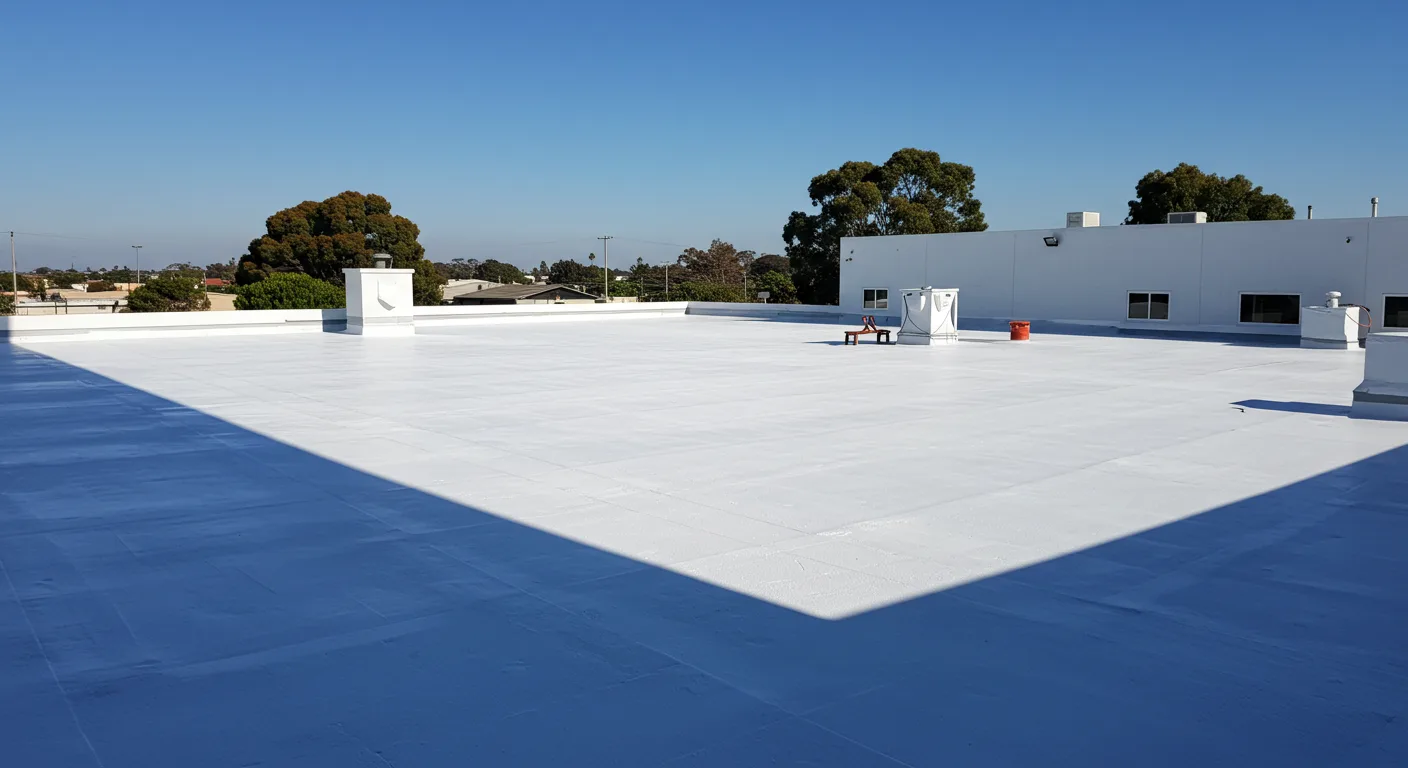
Today, we are seeing the convergence of nanotechnology with climate science. The current systemic evolution is focused on “Radiative Cooling” coatings. These materials use nano-sized particles to reflect up to 98% of solar radiation while simultaneously emitting heat in the “atmospheric window” (wavelengths between 8 and 13 micrometers), effectively allowing a building to shed heat into deep space even under direct sunlight.
Conceptual Frameworks and Mental Models Best Nanotech Exterior Coatings
To analyze nanotech coatings with editorial rigor, we employ several core mental models:
1. The Surface Energy Hierarchy
In this framework, the goal of a coating is to manipulate “Surface Energy” (). High-surface-energy materials (like clean glass) attract liquids, causing them to spread. Nanotech coatings aim for ultra-low surface energy. By making the surface chemically “unattractive” to contaminants, we move from adhesion to repulsion.
2. The Lotus Effect vs. The Pitcher Plant Effect
There are two primary ways to achieve hydrophobicity. The “Lotus Effect” relies on a dry, microscopic textured surface to trap air beneath water droplets. The “Pitcher Plant” model (or SLIPS—Slippery Liquid-Infused Porous Surfaces) uses a nano-porous structure to hold a thin layer of lubricating liquid. Understanding which model a coating uses is critical for predicting its durability under mechanical abrasion.
3. The Inorganic Backbone Model
Most paints fail because their organic (carbon-based) bonds are “broken” by UV light. Nanotech coatings often use an inorganic (silicon-oxygen) backbone. Since this bond is significantly stronger than the energy of a UV photon, the coating is essentially immune to sun-bleaching and “chalking,” the white powdering common in standard paints.
Key Categories of Nanotech Exterior Coatings
Decision Logic: Matching Mechanism to Environment
If the project is a high-rise in a smog-heavy urban center, a photocatalytic coating is the logical choice, as it will actively break down NOx gases. For a coastal structure facing salt-air corrosion, a nano-ceramic or graphene-infused barrier provides the necessary chemical inertness.
Detailed Real-World Scenarios Best Nanotech Exterior Coatings
The Urban Glass Curtain Wall
A 50-story commercial tower in a high-pollution city.
-
Constraint: Prohibitive window-washing costs and rapid soot accumulation.
-
Decision: A hydrophilic nano-silica coating.
-
Logic: Rather than repelling water, this coating allows water to “sheet” out, sliding beneath the soot and lifting it away during light rain.
-
Failure Mode: If the area experiences a prolonged drought, the soot can “bake” onto the silica layer, requiring a surfactant-based wash.
The Data Center in a Subtropical Climate
A massive facility requiring constant cooling in a high-humidity, high-heat zone.
-
Constraint: Rising energy costs and equipment strain.
-
Decision: A radiative cooling nanotech coating.
-
Outcome: The facility achieves “sub-ambient” cooling during peak hours, reducing HVAC load by 15-20%.
-
Second-Order Effect: The reduced thermal cycling of the building’s structural panels extends the life of the expansion joints.
Planning, Cost, and Resource Dynamics
The economic profile of nanotech coatings is characterized by high initial “Material-to-Labor” ratios. While a standard paint might be $40/gallon, a premium nanotech coating can range from $250 to $800 per gallon.
Lifecycle Value: The “Cost of Cleanliness”
Standard coatings require a full recoat every 5–7 years. A nanotech system, despite the 3x higher upfront cost, often reaches “break-even” by year 8 through the total elimination of power-washing and the doubling of the recoat interval.
Tools, Strategies, and Support Systems Best Nanotech Exterior Coatings
-
High-Pressure Deionization: Surfaces must be free of ions and microscopic salts to ensure the “Van der Waals” forces of the nanotech coating can engage.
-
Electrostatic Sprayers: For nano-ceramic coatings, an electrostatic charge ensures even wrap-around coverage and minimizes material waste.
-
Contact Angle Goniometers: A tool used to measure the “beading” of a surface. It is the primary way to verify that a superhydrophobic coating was applied correctly.
-
ATP Bioluminescence Testing: To verify that antimicrobial nano-coatings are actively killing organic matter on a surface.
-
Sub-surface Primers: Many nanotech systems require a “transition layer” that acts as a bridge between the organic substrate and the inorganic coating.
-
Ambient Cure Sensors: Nanotech coatings often require a specific humidity window (e.g., 40–60%) to allow the molecules to orient themselves correctly before hardening.
Risk Landscape: Failure Modes and Nano-Specific Risks
-
Interfacial Delamination: If the surface isn’t prepped to a “molecularly clean” level, the nanotech layer will bond to the dust rather than the substrate, leading to premature peeling in large, thin sheets.
-
“Clouding” or Ghosting: Over-application of nano-ceramics can lead to light diffraction, making the surface look hazy or milky.
-
Photocatalytic “Burning”: If a coating is applied to an organic substrate (like wood or low-grade vinyl) without a primer, it may actually “digest” the substrate it is meant to protect.
-
The “Shadow” Effect: Photocatalytic coatings only work in the sun. Shaded areas of a building will remain dirty, leading to an uneven, blotchy appearance.
Governance, Maintenance, and Long-Term Adaptation Best Nanotech Exterior Coatings
Maintaining a nanotech exterior requires a shift from “Scrubbing” to “Restoring.”
Layered Maintenance Checklist:
-
Monthly: Visual check for “hydrophobic loss.” If water stops beading, the surface may simply be “blinded” by a layer of oil or wax.
-
Quarterly: Soft-water rinse. Avoid high-pressure washing, which can mechanically abrade the delicate nano-textures.
-
Annual: Re-activation wash. Some photocatalytic coatings require a specific pH-balanced solution to clear the “spent” contaminants from the nano-pores.
-
5-Year Audit: Professional measurement of the contact angle. If the angle has dropped below 120°, a “top-up” or “mist” coat of the nano-resin may be required.
Measurement, Tracking, and Evaluation
Evaluation moves from the qualitative (“it looks clean”) to the quantitative:
-
Contact Angle Tracking: Maintaining a record of beading angles over time. A healthy nanotech surface should maintain a contact angle > 150°.
-
Solar Reflectance Index (SRI): For cooling coatings, tracking the SRI annually tells you when the surface has become too occluded with pollutants to function.
-
VOC and NOx Reduction Logging: In industrial settings, air quality sensors near the facade can measure the “Active” cleaning work being done by the coating.
Common Misconceptions and Technical Corrections Best Nanotech Exterior Coatings
-
Myth: “Nanotech makes a building waterproof forever.”
-
Correction: Nanotech manages moisture; it doesn’t stop the building from breathing. Most nano-coatings are highly vapor-permeable.
-
-
Myth: “I can apply nanotech over my old paint.”
-
Correction: Most nanotech resins are incompatible with standard acrylics. They will either fail to bond or cause the old paint to “shrivel.”
-
-
Myth: “Nano-coatings are dangerous to breathe.”
-
Correction: Once the coating has “cured” and bonded, the nanoparticles are locked into a solid matrix and pose no inhalation risk. The risk is limited to the liquid application phase.
-
-
Myth: “Thicker is better.”
-
Correction: In nanotechnology, “more” is often worse. Excess thickness interferes with the molecular orientation, leading to brittleness.
-
Ethical and Environmental Considerations
The primary ethical debate in nanotechnology involves the eventual runoff of particles. While bonded coatings are stable, the industry is moving toward “Biodegradable Nano-carriers” to ensure that any material lost during application does not persist in the water table. Furthermore, the energy-saving potential of radiative cooling coatings represents a significant tool in mitigating the “Urban Heat Island” effect, making these coatings not just a luxury, but a civic utility in a warming climate.
Conclusion Best Nanotech Exterior Coatings
The selection of the best nanotech exterior coatings is an exercise in material honesty. It requires a departure from the “paint-and-patch” mentality toward a holistic view of surface science. Nanotechnology offers the potential for structures that stay clean, stay cool, and effectively “heal” themselves through chemical inertness. However, this performance is entirely contingent on the precision of the installation and the understanding of the underlying chemistry. As we move further into the 21st century, these molecular barriers will become the standard for any structure intended to outlast the generational cycles of maintenance, standing as a testament to the power of engineering the small to protect the large.