The Science of External Envelopes: A Comparative Analysis of Protective Coatings
Compare exterior paint systems the exterior of a residential or commercial structure is not merely a facade but a sophisticated boundary layer subject to relentless kinetic and chemical stress. To view exterior painting as a decorative afterthought is to ignore the fundamental physics of building science. Moisture vapor transmission, solar radiation, and thermal expansion constantly challenge the bond between the substrate and its protective film. Consequently, the selection of a coating system is a high-stakes engineering decision that dictates the rate of depreciation for the entire physical asset.
Modern architectural coatings have evolved far beyond the simple oil-and-pigment mixtures of the previous century. We now operate in an era of hybridized resins, ceramic reinforcements, and nanotechnology designed to mitigate specific environmental threats. This evolution, however, has introduced a paradox of choice. The performance delta between a standard acrylic latex and a high-build elastomeric or a fluoropolymer-based system is vast, yet these differences are often obscured by marketing nomenclature that prioritizes “curb appeal” over technical durability.
A rigorous evaluation of these materials requires a move away from superficial product comparisons toward a systemic understanding of how coatings interact with varied substrates—from the cellular structure of cedar to the high-alkalinity environment of fresh stucco. The goal of this analysis is to establish a technical baseline for those who view property maintenance as an exercise in long-term risk management. By deconstructing the chemical and mechanical properties of contemporary systems, we can move toward a more objective framework for structural preservation.
Compare Exterior Paint Systems: A Multi-Dimensional Analysis
To effectively compare exterior paint systems, one must first discard the notion that there is a “best” paint. In a professional editorial context, “best” is a meaningless superlative. Performance is entirely contingent upon the intersection of substrate biology, regional climate, and the chemical genealogy of the previous coating. The primary risk in making these comparisons is oversimplification—treating a coating as a static layer rather than a dynamic membrane.
A common misunderstanding involves the “permeance” of a paint film. Homeowners often seek the most “waterproof” option, yet a completely waterproof coating can be catastrophic for a wood-sided home. Wood must breathe; if a coating traps internal vapor, the resulting pressure will cause the paint to delaminate from the inside out. Therefore, comparing systems requires an analysis of “perm ratings”—the measure of how much water vapor can pass through the film. A system with a low perm rating might be perfect for a steel warehouse but disastrous for a historic Victorian.
Furthermore, the comparison must account for the “solids by volume” metric. This is the amount of material that remains on the wall after the solvents evaporate. Two cans of paint may look identical in the store, but one may be 25% solids while the other is 45%. The latter provides a thicker dry film (DFT), offering superior protection against UV degradation. When we compare exterior paint systems, we are essentially comparing the quality and quantity of the resin (the binder) and its ability to withstand the entropy of the external environment.
The Historical Trajectory of Exterior Coatings
Compare exterior paint systems the transition from lead-based oils to modern waterborne systems was not merely a regulatory shift; it was a fundamental change in how coatings achieve durability. Traditional alkyd resins created a brittle, hard film that excelled in scrub resistance but lacked the flexibility required for exterior thermal cycles. As a house expanded in the summer heat, the rigid oil film would crack, allowing moisture to penetrate.
The introduction of 100% acrylic resins in the mid-20th century revolutionized the industry by providing “elongation”—the ability of the paint film to stretch and contract without fracturing. This was a critical advancement for wood and masonry substrates alike. Today, we are seeing the rise of “cool roof” technologies and heat-reflective wall coatings that utilize infrared-reflective pigments. These systems don’t just protect the surface; they alter the thermal performance of the building, reducing the “urban heat island” effect and lowering interior cooling costs. Understanding this evolution is vital because most modern projects involve applying new-age chemistry over old-age residues, a process fraught with compatibility risks.
Conceptual Frameworks for Selection Compare Exterior Paint Systems
To navigate the myriad of available options, three primary mental models can be used to filter the decision-making process.
The “Substrate Synergy” Framework
This model posits that the substrate dictates the chemistry. You do not choose a paint; you identify a substrate need and find the chemical match. For example, high-alkalinity masonry (stucco or concrete) requires an alkali-resistant primer to prevent “saponification,” where the paint literally turns into soap due to a chemical reaction with the substrate.
The “Sacrificial Layer” Theory
In this framework, paint is viewed as a sacrificial shield. It is intended to erode so the house does not. This model prioritizes “chalking” rates—the controlled breakdown of the resin. A system that doesn’t chalk at all may become too brittle, while one that chalks too fast disappears before its time.
The “Cost-per-Year-of-Service” Model
This moves the focus from the initial invoice to the lifecycle cost. If System A costs $5,000 and lasts 5 years ($1,000/year) and System B costs $8,000 and lasts 12 years ($666/year), System B is the objectively superior economic choice despite the higher entry price.
Taxonomy of Modern Coating Systems
The diversity of modern coatings allows for precise targeting of structural vulnerabilities. Below is a categorization of the dominant systems currently in use.
Decision Logic: The Hierarchy of Adhesion
The most critical decision point in any system comparison is the primer-to-substrate bond. For non-porous surfaces like vinyl or metal, a bonding primer with high “wet-adhesion” properties is non-negotiable. For porous surfaces like old cedar, a slow-drying oil primer that can penetrate deep into the fibers often outperforms modern water-based alternatives, despite the longer wait time.
Detailed Real-World Scenarios Compare Exterior Paint Systems
The High-Desert Exposure
In climates like Arizona, the primary threat is not moisture but UV radiation and extreme diurnal temperature swings. A standard paint will “burn off” (binder degradation) within 3 years. The plan here must prioritize high-grade inorganic pigments and resins with high UV-absorbers. The failure mode is typically “glazing” or “cracking” due to the loss of flexibility.
The Coastal Salt-Air Environment
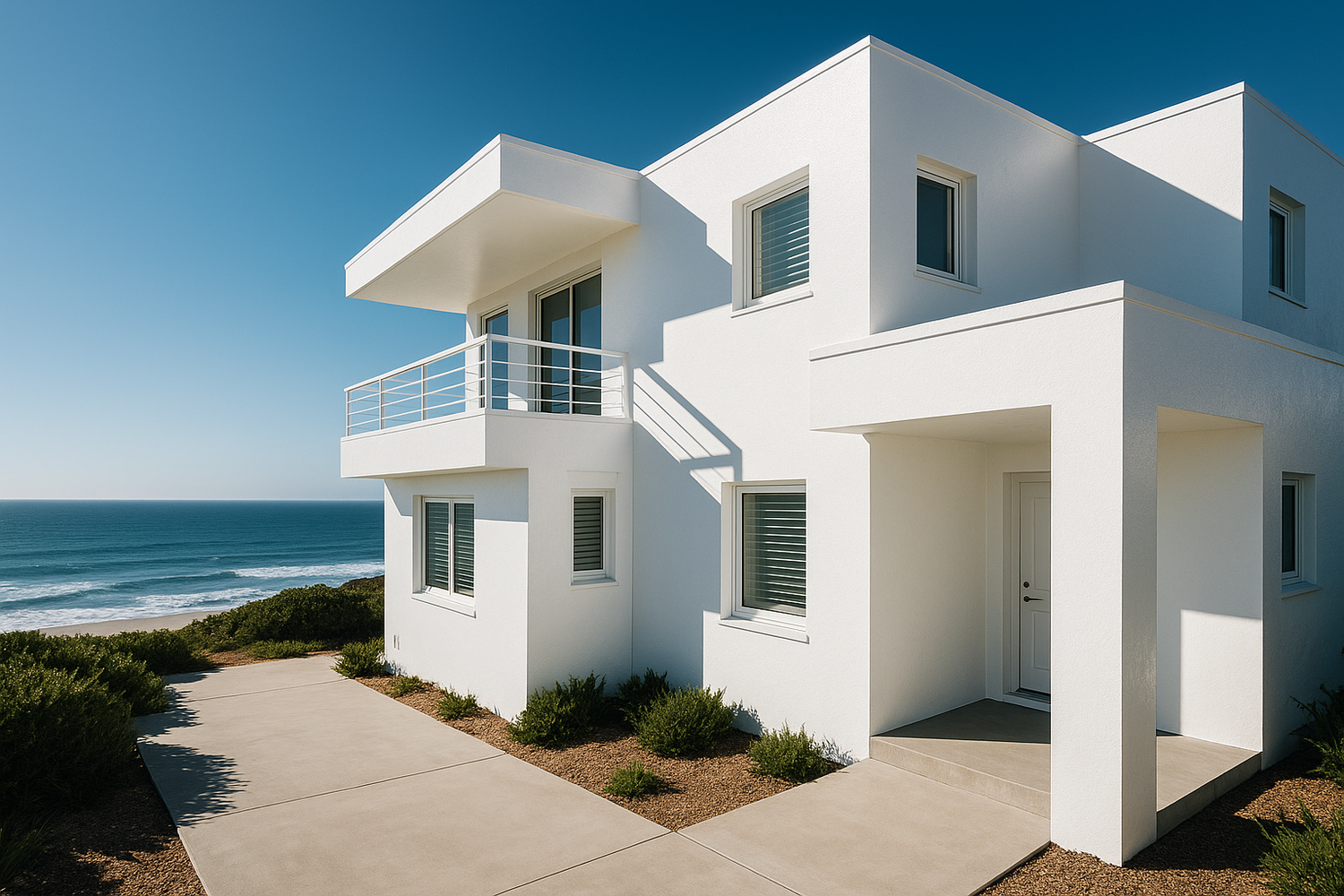
Coastal homes face “chloride attack” and constant humidity. Here, the system must include a salt-neutralizing wash during prep and a coating with high moisture-resistance but adequate breathability. The second-order effect of using an improper system is the corrosion of underlying fasteners (nails/screws), leading to “bleeding” or structural weakening.
The Historic Brick Restoration
Applying a modern acrylic over 19th-century brick is a common error. Historic brick is soft and porous. A modern film can trap moisture, causing the brick face to “spall” (break off) during a freeze-thaw cycle. The appropriate system is a mineral silicate paint that chemically bonds to the stone while remaining 100% breathable.
Planning, Cost, and Resource Dynamics
The financial landscape of exterior painting is frequently misinterpreted. Labor typically accounts for 75% to 85% of the total project cost. Consequently, saving $200 on “budget” paint is a logistical fallacy when the labor to apply it costs $10,000.
Range-Based Investment Table
Tools, Strategies, and Support Systems
A system is only as good as its application method. The “Compare Exterior Paint Systems” task must extend to the delivery mechanisms.
-
Mechanical Abrasion (Sanding/Grinding): Essential for removing the “mill glaze” on new wood or the oxidation on old paint. Without this, even the best paint is “floating” on a layer of dust.
-
Moisture Meters: A mandatory tool for any professional plan. Applying paint to wood with a moisture content above 15% is a guaranteed recipe for failure.
-
High-Pressure Airless Sprayers: Efficient for volume but can lead to “dry spray” (paint drying in the air before hitting the wall) in windy conditions.
-
Back-Brushing: The manual process of brushing in sprayed paint. This is the “gold standard” for ensuring the coating is forced into the substrate’s irregularities.
-
Thermal Imaging: Used to detect hidden moisture pockets behind siding before a system is specified.
Risk Landscape and Failure Modes Compare Exterior Paint Systems
Systemic failure is rarely caused by a single factor; it is usually a compounding series of events.
-
Surfactant Leaching: Brown streaks appearing on fresh paint. This happens when the paint is exposed to dew before the water-soluble ingredients have evaporated.
-
Adhesion Loss (Peeling): Often caused by “inter-coat contamination”—dust or moisture settling between the primer and the topcoat.
-
Mildew/Algae Colonization: A risk in shaded, damp areas. High-quality systems include “mil-spec” biocides to prevent the coating from becoming a food source for biological growth.
-
Efflorescence: White powdery salt deposits on masonry. If the paint system isn’t “alkali-resistant,” these salts will push the paint off the wall.
Governance, Maintenance, and Long-Term Adaptation
A “set it and forget it” mentality is the primary driver of premature structural failure. A robust governance plan involves:
-
Quarterly Visual Audits: Checking for mechanical damage (hail, landscaping impacts).
-
The “North-Wall” Monitor: Since the north side stays damp longer, it serves as the “canary in the coal mine” for biological growth.
-
Adjustment Triggers: If chalking becomes visible on a gloved hand, it is a trigger for a “refresh” coat before the primer is exposed.
-
Documentation: Keeping a “Coatings Log” that tracks batch numbers, weather conditions during application, and any thinning agents used.
Measurement, Tracking, and Evaluation Compare Exterior Paint Systems
Evaluating the performance of a system requires a transition from qualitative (“It looks good”) to quantitative data.
-
Dry Film Thickness (DFT) Testing: Using a gauge to ensure the applied system matches the manufacturer’s specification.
-
Cross-Hatch Adhesion Test: A destructive test performed on a small area to verify the strength of the bond between layers.
-
Gloss-Retention Log: Measuring the sheen levels over time. A rapid drop in gloss indicates premature resin breakdown.
Common Misconceptions and Oversimplifications
-
Myth: “Self-priming paint” is always a one-step solution.
-
Correction: These are actually high-build paints. They work on stable surfaces but cannot replace a dedicated primer on problematic substrates like bleeding cedar or chalky masonry.
-
-
Myth: You should wait as long as possible between repaints.
-
Correction: Waiting until the paint is peeling increases prep costs by 300%. The ideal time to repaint is when the coating is still intact but starting to thin.
-
-
Myth: Power washing is the best way to prep.
-
Correction: Power washing can drive moisture deep into the wood, which takes weeks to dry. Mechanical scraping and sanding are far superior for substrate health.
-
-
Myth: Dark colors are “stronger.”
-
Correction: Dark colors absorb more heat, leading to higher thermal expansion stress on the wood and faster fading of the pigment.
-
Synthesis and Editorial Judgment Compare Exterior Paint Systems
The effort to compare exterior paint systems ultimately reveals that architectural protection is an ongoing negotiation with the environment. There is no ultimate coating, only the most appropriate chemical response to a specific set of constraints. The “senior editorial” perspective on this subject prioritizes the integrity of the substrate above the beauty of the finish.
A successful exterior strategy is characterized by its adaptability. It recognizes that as a building ages, its needs change—a house that thrived under a simple acrylic system in its youth may require a more specialized mineral or elastomeric system in its later years. Intellectual honesty in this field requires acknowledging that the most expensive system is not a cure-all for poor preparation. True authority in property management is found in the patience of the planning phase: the moisture checks, the substrate repairs, and the rejection of seasonal trends in favor of timeless chemical compatibility.