The Architecture of Resource Efficiency: A Deep Dive into Material Optimization
How to reduce material waste the modern industrial landscape is defined by the tension between production output and resource depletion. Historically, material waste was viewed as a natural byproduct of growth—an inevitable “externality” of the manufacturing and consumption cycle. However, as global supply chains face increasing volatility and environmental constraints become more rigid, the ability to minimize output loss has transitioned from a niche environmental concern to a core operational competency. Reducing waste is no longer just about the disposal phase; it is an integrated discipline that begins with molecular design and ends with the logistical recovery of value.
Systemic material loss occurs at every node of the value chain: during extraction, refinement, design, fabrication, and post-consumer handling. Addressing this requires a departure from the “take-make-dispose” linear model toward a framework that treats materials as assets to be curated rather than consumables to be exhausted. This shift demands a sophisticated understanding of material science, behavioral economics, and systems engineering. It is not merely a matter of better housekeeping or improved recycling bins, but a fundamental reimagining of how utility is delivered to an end user.
Effective strategies for waste mitigation must account for the second-order effects of material choices. A decision to switch to a lighter-weight material might reduce transportation emissions, but if that material is non-recyclable or has a shorter lifespan, the net material waste may actually increase. Therefore, the editorial focus of this analysis is on high-level optimization—identifying where efficiency can be reclaimed without compromising structural integrity or functional performance.
how to reduce material waste
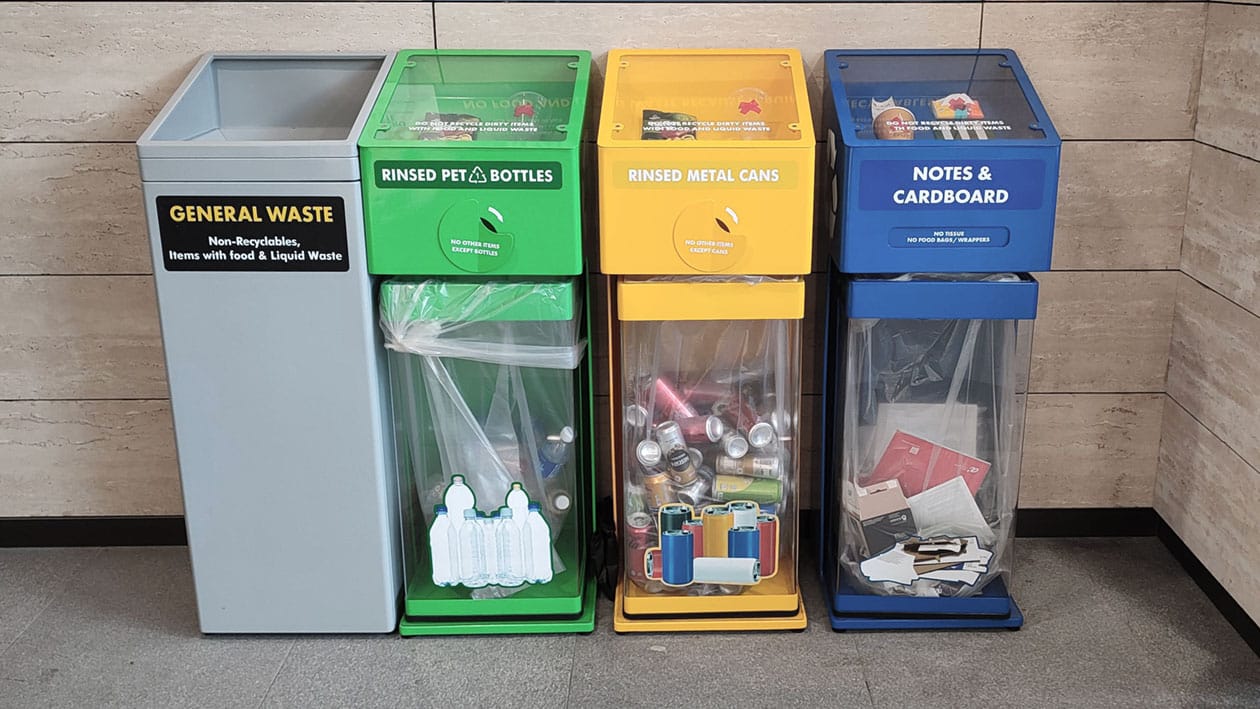
The phrase “material waste” is often oversimplified to mean “trash,” yet in a professional or industrial context, it encompasses any resource that does not contribute to the final value of a product or service. This includes over-processed materials, excess inventory, defective units, and even the “invisible” waste of over-engineered components. Understanding how to reduce material waste requires a multi-perspective approach that balances technical feasibility with economic reality.
One common misunderstanding is the belief that recycling is the primary solution. In reality, recycling is a “downstream” intervention that often recovers only a fraction of the energy and material quality originally invested. A more rigorous perspective views waste as a design flaw. If a product generates significant scrap during production, the flaw is not in the disposal method, but in the fabrication logic or the geometry of the part itself.
Furthermore, the risk of oversimplification leads many organizations to focus on “zero waste” as a literal target. In complex physical systems, absolute zero waste is often physically impossible due to the laws of thermodynamics and the realities of friction, oxidation, and contamination. The objective is optimization—reaching the “economic limit” where the cost of recovering the next gram of material does not exceed the value of the material itself.
Deep Contextual Background: The Evolution of Materiality
How to reduce material waste the history of material waste is intrinsically linked to the history of energy. In the pre-industrial era, materials were expensive and labor was relatively cheap. Consequently, wood, stone, and metal were used with extreme parsimony. Buildings were repurposed, clothes were mended for decades, and metal tools were forged and re-forged until the molecules themselves were lost to oxidation.
The Industrial Revolution inverted this relationship. Mass production and the discovery of fossil fuels made materials cheap and labor (relatively) more expensive. This birthed the “Linear Economy.” Efficiency was measured by speed and volume, leading to the standardization of components which, while lowering costs, ignored the idiosyncratic waste generated by rigid manufacturing templates.
In the late 20th century, the “Lean Manufacturing” movement, pioneered by the Japanese automotive industry, began to redefine waste (Muda). It identified seven types of waste, many of which were material-based, such as overproduction and defects. Today, we are entering a third phase: the “Circular Economy.” This era is defined by digital tracking (the “Internet of Materials”), where every unit of matter is tagged and traced, allowing for precision recovery and a return to the parsimony of the pre-industrial age, but powered by advanced technology.
Conceptual Frameworks and Mental Models How To Reduce Material Waste
To navigate the complexities of resource management, several mental models can be applied to provide clarity.
1. The 10R Hierarchy
While many are familiar with “Reduce, Reuse, Recycle,” the advanced framework involves ten levels of intervention:
-
Refuse: Abandoning functions that require high-waste materials.
-
Rethink: Multi-purpose usage.
-
Reduce: Minimizing intensity.
-
Repair, Refurbish, Remanufacture, and Repurpose: Extending the life of the “formed” material.
-
Recycle and Recover: Extracting raw value from the “unformed” material.
2. The Power of the Inner Circle
This model suggests that the most efficient way to reduce waste is to keep the material as close to its original state as possible. Repairing a laptop (inner circle) is more resource-efficient than shredding it for gold and plastic recovery (outer circle). The more “processing” a material undergoes to be reused, the more energy and secondary waste are created.
3. Dematerialization vs. Transmaterialization
-
Dematerialization involves doing more with less (e.g., a smartphone replacing a camera, a map, and a phone).
-
Transmaterialization involves switching to materials that are inherently less wasteful, such as moving from single-use plastics to biodegradable polymers or infinitely recyclable aluminum.
Key Categories of Material Waste and Trade-offs
Identifying waste requires a taxonomy. Not all waste is created equal; some are “process-intrinsic” (unavoidable given current tech), while others are “design-optional.”
Decision Logic for Material Selection
When choosing a material, the logic should follow a “Life-Cycle Impact” assessment. For example, in high-end construction, selecting slate roofing involves high initial material weight and transport costs. However, because slate can last over a century, its “waste per year of service” is significantly lower than asphalt shingles, which require replacement (and landfilling) every 20 years.
Detailed Real-World Scenarios How To Reduce Material Waste
High-Precision Manufacturing
A manufacturer of aerospace components uses titanium. The “buy-to-fly” ratio (the mass of the raw material vs. the finished part) is often 10:1, meaning 90% of the material becomes shavings.
-
Constraint: Structural integrity cannot be compromised.
-
Decision Point: Implement Additive Manufacturing (3D Printing).
-
Failure Mode: 3D printing may introduce micro-porosity, leading to fatigue.
-
Second-Order Effect: Reducing titanium waste lowers the energy demand of the refinery, as less “virgin” ore is needed.
Residential Construction
A developer is building a coastal home.
-
Constraint: High salt-spray environment and wind loads.
-
Decision Point: Prefabricated modular components vs. on-site stick-building.
-
Logic: Prefabrication in a controlled factory allows for 99% material utilization. On-site building typically results in 10-15% waste due to weather damage and manual cutting errors.
-
Risk: Transportation of large modules can be carbon-intensive.
Planning, Cost, and Resource Dynamics
The economics of waste reduction are often counter-intuitive. While material is a “cost,” the labor required to save that material can sometimes exceed the savings.
Opportunity Cost
The greatest “cost” in waste management is the opportunity cost of space. Stockpiling “scrap” for potential future use (the “we might need it someday” fallacy) consumes expensive warehouse floor space, often costing more in rent than the scrap value itself.
Tools, Strategies, and Support Systems How To Reduce Material Waste
-
Digital Twins: In industrial settings, a digital twin simulates the wear and tear of materials, allowing for “just-in-time” maintenance rather than “just-in-case” replacement.
-
Reverse Logistics Systems: Creating a “take-back” loop where the manufacturer is responsible for the product at the end of its life.
-
Generative Design: Using AI-driven algorithms to create bone-like structures that provide maximum strength with minimum material volume.
-
Standardization: Reducing the “parts bin” to a few versatile sizes to minimize the need for unique, high-waste components.
Risk Landscape and Failure Modes
Attempts to reduce waste can sometimes backfire, leading to systemic fragility.
-
The Fragility Trap: By reducing “buffer” material, a system becomes less resilient to unexpected shocks (e.g., a “just-in-time” inventory system failing during a port strike).
-
Contamination Risks: In the rush to use recycled content, “zombie” chemicals or low-quality fibers can enter the supply chain, weakening the final product.
-
The Rebound Effect: As material use becomes more efficient and cheaper, total consumption may actually increase (Jevons Paradox).
Governance, Maintenance, and Long-Term Adaptation How To Reduce Material Waste
Reducing waste is not a one-time project; it is a metabolic process that requires ongoing governance.
Layered Monitoring Checklist:
-
Daily: Visual inspection of scrap bins for “unusual” patterns.
-
Monthly: Reconciliation of raw material purchases against finished goods output.
-
Quarterly: Review of “Design for Disassembly” (DfD) protocols for new products.
-
Annually: External audit of waste-to-landfill ratios and vendor compliance.
Measurement, Tracking, and Evaluation
You cannot manage what you do not measure. A sophisticated tracking system distinguishes between “yield” and “utility.”
-
Mass Balance Analysis: A quantitative documentation of every kilogram of material entering a facility. Total Input = Total Output + Waste + Emissions.
-
Material Circularity Indicator (MCI): A score that measures how “restorative” a material flow is.
-
Leading Indicators: Number of design reviews where waste was a primary KPI.
-
Lagging Indicators: Total tonnage of waste diverted from landfills.
Common Misconceptions and Oversimplifications How To Reduce Material Waste
-
Myth: “Biodegradable” means it can be thrown away anywhere.
-
Correction: Most biodegradable materials require industrial composting conditions (heat/moisture) to break down effectively; in a landfill, they produce methane.
-
-
Myth: Virgin material is always superior.
-
Correction: Modern “upcycling” and purification technologies often yield recycled polymers and metals that meet or exceed virgin specs.
-
-
Myth: Waste reduction is expensive.
-
Correction: While the tools may be expensive, the reduction in raw material procurement and disposal fees usually results in a net positive ROI within 18–36 months.
-
Ethical and Contextual Considerations
The pursuit of waste reduction must be tempered by human safety and ethics. For example, in medical settings, “single-use” plastics are a massive source of waste but are essential for preventing cross-contamination. Here, the focus shifts from “reducing material” to “innovating the material itself”—finding polymers that can be sterilized with less energy or and safely incinerated for energy recovery.
Conclusion How To Reduce Material Waste
Mastering how to reduce material waste is an exercise in rigorous observation and systemic thinking. It requires moving beyond the aesthetics of “green” initiatives and into the mechanics of material flow. By aligning design intent with manufacturing precision and end-of-life recovery, organizations and individuals can decouple growth from environmental degradation.